By clicking “Accept,” you agree to the use of cookies and similar technologies on your device as set forth in our Cookie Policy and our Privacy Policy. Please note that certain cookies are essential for this website to function properly and do not require user consent to be deployed.

The Best Views on the Camino de Santiago

Walking the Camino de Santiago? Make sure you don’t miss these stunning viewpoints along the way.
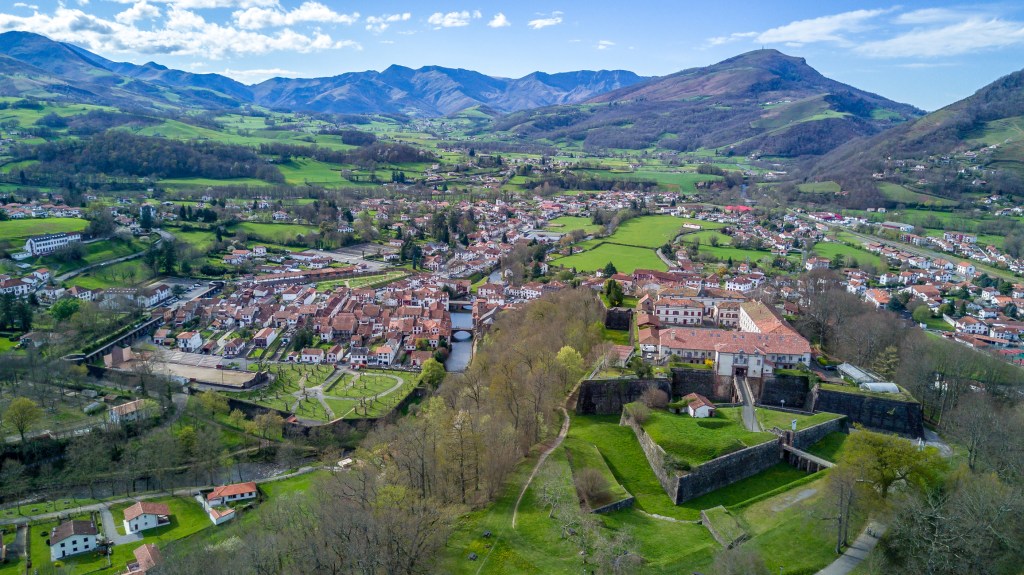
Aerial view of red-roofed village buildings nestled among lush green mountains
Saint-Jean-Pied-de-Port. Photo © Tamas Karpati/Dreamstime.

La Citadelle

The highest point in Saint-Jean-Pied-de-Port (Km 779.9) offers breathtaking views of the surrounding hills and mountains and into the town where the modern Camino officially begins.

Col de Lepoeder

The second-highest summit on the entire Camino, with panoramic views of the Pyrenees in France and Spain. (Km 759.5)


Puerto de Ibañeta

It was fabled among medieval pilgrims that they could touch heaven from this pinnacle (the high point on the Route Valcarlos), which overlooks multicolored heather- and fern-covered mountains. (Km 757.4)

Alto del Perdón

It’s said that the wind on this high ridge (whose name means “height of forgiveness”) has the power to carry away one’s burdens and sorrows. Views overlook the sweeping slopes and rocky fields of the Cantabrian mountains. (Km 698.3)
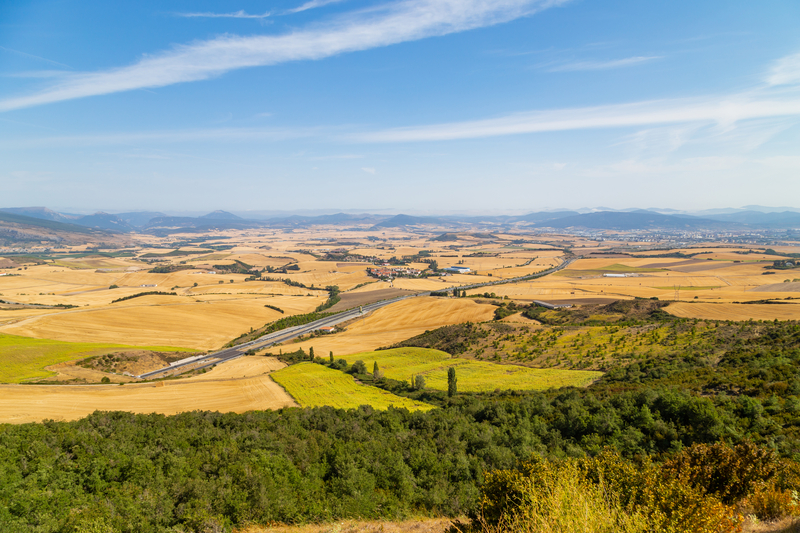
A landscape of patchwork golden fields under bright blue sky
View from Alto del Perdón. Photo © Rui Vale De Sousa/Dreamstime.

Cuesta de Matamulos

On this hill, just before Hornillos del Camino (Km 468.6), the road suddenly opens to a glorious vista of fields that in spring are specked with red poppies.

Alto de Mostelares

A final steep climb before the vast meseta, this high hilltop reveals infinite, open blue sky and endless green and gold patchwork wheat fields far below your feet. (Km 445.4)

Monte Irago and Alto Altar Mayor

After enacting one of the Camino’s most potent rituals—laying a stone at the base of the Cruz de Ferro monument (Km 232.3)—you’ll encounter the path’s true highest summit, just past the hamlet of Manjarín. Take in a view of the surrounding mountains and, soon after, the approaching village of El Acebo at your feet below and of the large town of Ponferrada in the distance, nestled in the bowl of a fertile mountain valley.

A hiker descending a rocky dirt path towards small village in lush green mountainous valley
A pilgrim approaching El Acebo. Photo © Max Maximov Photography/Dreamstime.

Mountaintop view from La Faba

As you leave La Faba, turn around for an idyllic view of Iglesia de San Andrés nestled below the village, with multicolored mountains rolling out beyond the bell tower. (Km 159.2)

O Cebreiro

Sunrise and sunset are stunning from the Camino’s third-highest point. (Km 154.3)

Monte do Gozo

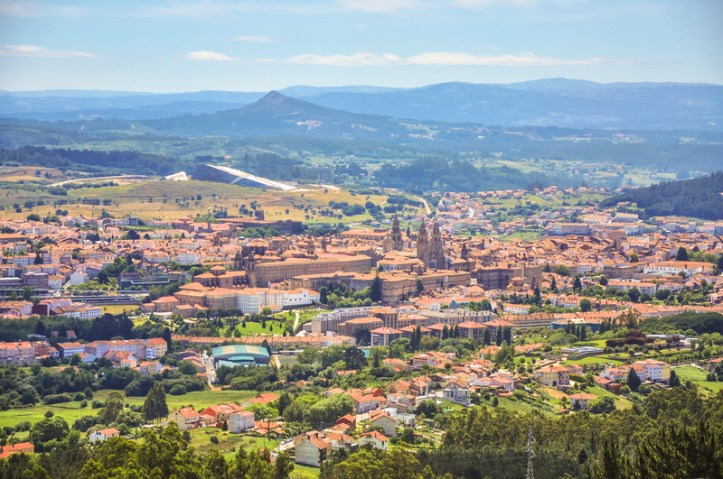
At the highest point of Monte do Gozo hill, you’ll catch your first glimpse of the cathedral spires in Santiago de Compostela. You’ve almost arrived! (Km 4.9)

Cabo Finisterre

From this jutting peninsula of finis terrae (literally, the end of the world), look out over the cliffs where infinite sky meets the infinite Atlantic Ocean.
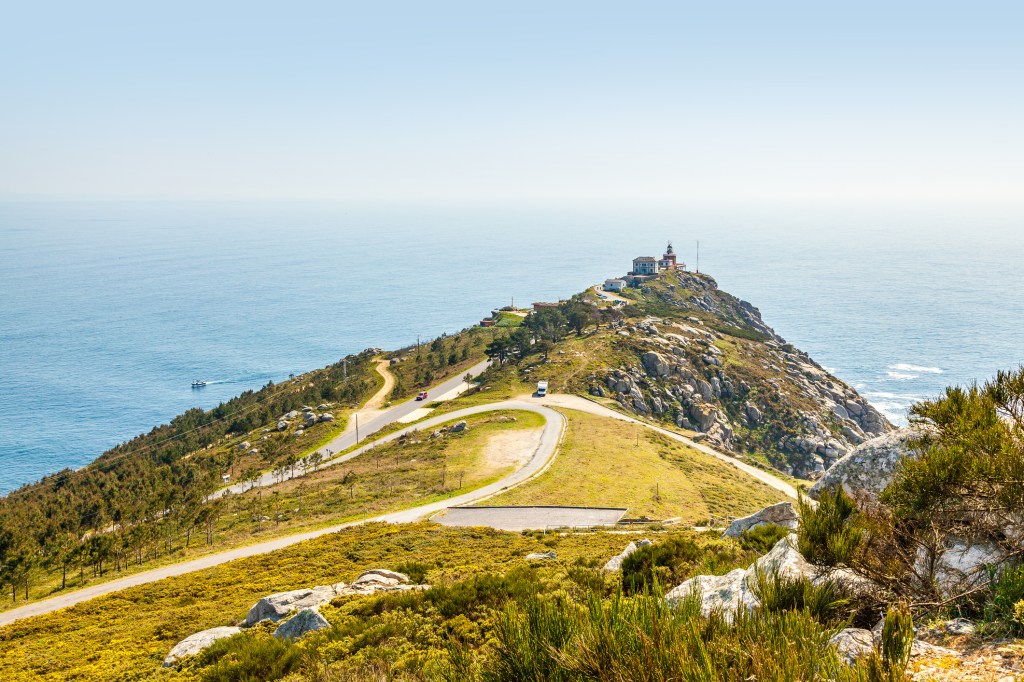
A trail leading to rocky promontory overlooking the sea
Cabo Finisterre. Photo © Hans Geel/Dreamstime.

Santuario da Virxe da Barca

This picturesque monument on Muxía’s small peninsula, a bottleneck of land between ocean and bay, offers incredible views of sunrise and sunset.
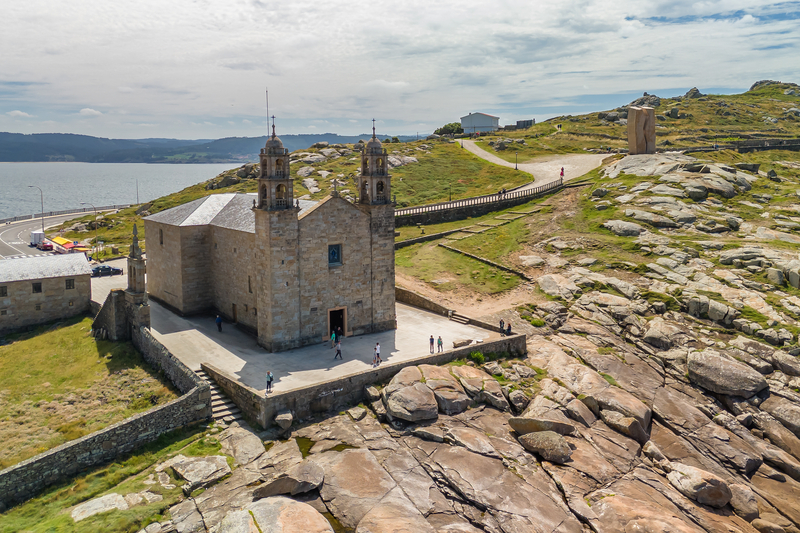
Aerial image of a large stone church on a rocky peninsula next to the sea
Santuario da Virxe da Barca. Photo © Aliaksandr Mazurkevich/Dreamstime.

Planning your journey?

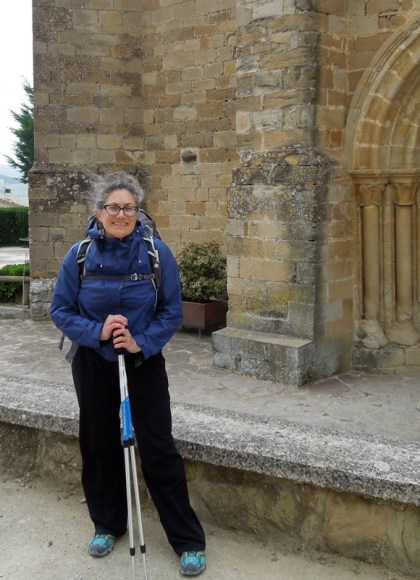
woman standing with hiking gear in front of an old buildling

Beebe Bahrami

About the Author

For over three decades Colorado native, writer, anthropologist, and pilgrim Beebe Bahrami has explored, visited, researched, written about, and lived on numerous routes of the Camino de Santiago in France, Spain, and Portugal, logging well over 10,000 miles, and counting. As a researcher and writer, she discovered long ago that exploring a place at the pace of feet was one of the best tools for uncovering the deeper stories therein, slowing down to talk to locals working the land, to climb to an archaeological site just around the bend, to witness timid wildlife, to sit and listen to villagers share life stories, to discover a remote chapel carved with local extra-religious folkloric images, and to fold into the local cadences of life and land. She has survived pigeon, boar, and rabbit hunting season in the Pyrenees, detoured with sheepherders in Rioja, attended sung prayer for a week with monks in León, tracked down petroglyphs, dolmens, and Iron Age castro sites from Navarra to Galicia, and throughout explored the Caminos deepest layers, from prehistory (including Neandertals!) to the Middle Ages to the present.
 
Many of Beebe’s books, article, and essays center on the Camino de Santiago and the legacy, cultures, and lands through which it threads, such as her literary travel memoirs, The Way of the Wild Goose, Café Oc, and Café Neandertal, and this comprehensive guidebook, Moon Camino de Santiago. Her writing also appears in BBC Travel, Wine Enthusiast, Archaeology, the Pennsylvania Gazette, Perceptive Travel, Michelin Green Guides, National Geographic books, and The Bark, among other publications. Visit http://www.beebebahrami.weebly.com to learn more.
 

Learn more about this author

Pin It for Later

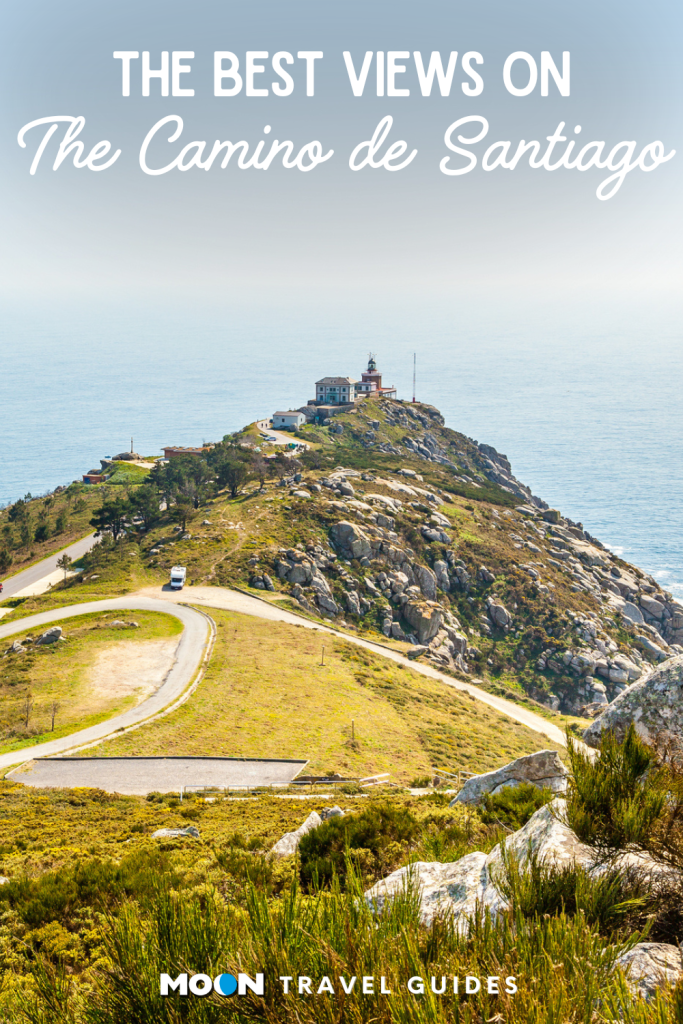
Image of rocky ocean promontory with text The Best Views on The Camino de Santiago