What to See at Shasta Lake
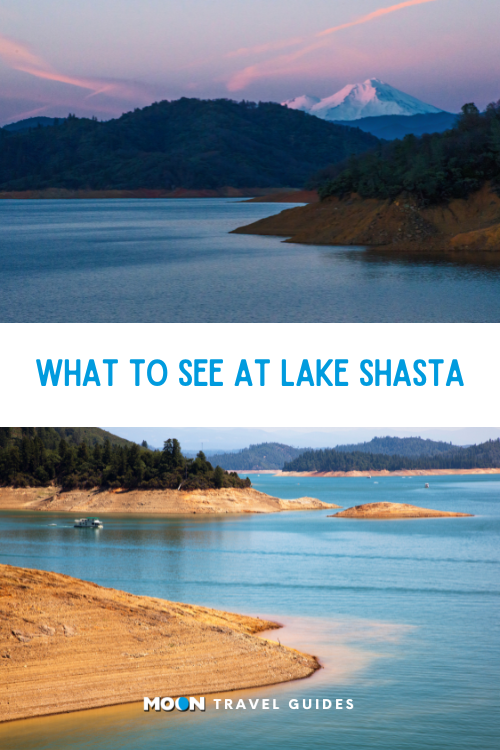
Shasta Lake doesn’t look like most lakes. Rather than a bowl shape, the lake is fed by three major rivers—the Sacramento, the Pit, and the McCloud—plus Squaw Creek, and each of these has an arm of the lake named after it. To create this sprawling artificial lake, five towns were drowned. The remains are still down there, most sunk so deep that even scuba divers cannot explore them. Altogether, the lake has 29,500 acres of surface area, and it’s 517 feet deep when it’s full. It also has 369 miles of shoreline, which means lots of great places for camping in a tent or an RV as well as hiking and wildlife-viewing. The unusual layout of this lake makes it all the more interesting for houseboats, waterskiing, fishing, swimming, canoeing, and wakeboarding.
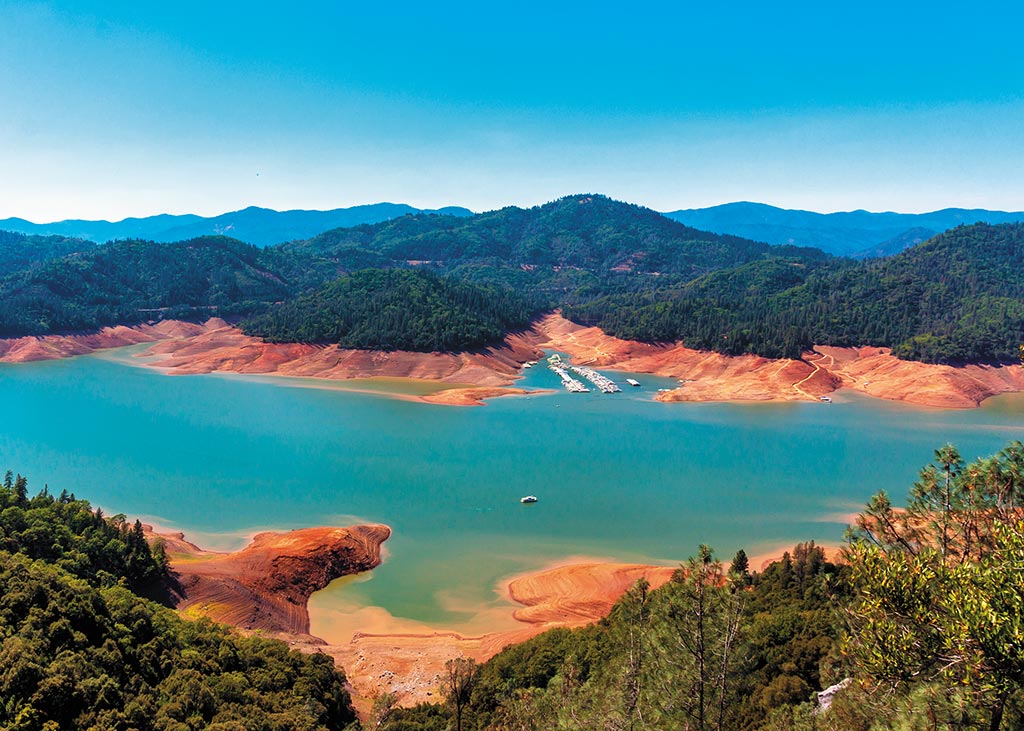
The lake’s four main arms and its many inlets all have their own characters, shapes, and surprises. Surrounding many fingers of the lake and some of the bigger pools are marinas, campgrounds, resorts, cabins, and restaurants for lakeside vacations. Marinas dot the shores of the lake’s fingers, offering boat rentals, gas, snacks, water, ice, and more. For those few who don’t want to spend all day every day on the water, hiking trails and 4WD roads thread through the forested wilderness areas surrounding the lake.
There are several very small towns close to Shasta Lake and Shasta Dam. At the south side of the lake is the tiny City of Shasta Lake. You won’t find much besides a couple of motels and a pizza parlor. At the north side of the lake is Lakehead, right on I-5 midway between Redding to the south and the City of Mount Shasta to the north.
Lake Shasta Caverns
Summer lake visitors can find themselves longing for cool air—hard to come by at Shasta in August. The best natural air-conditioning in the region is inside the Lake Shasta Caverns (20359 Shasta Caverns Rd., Lakehead, 530/238-2752 or 800/795-2283, 9am-4pm daily Memorial Day-Labor Day, 9am-3pm daily Apr.-May and Sept., tours 10am, noon, 2pm daily Oct.-Mar., adults $24, ages 3-15 $14). Tours begin across the lake from the caverns at the Caverns Park and gift shop. In summer, tours leave every 30 minutes 9am-4pm. When your tour is called, you walk down to the boat launch and board a broad flat-bottomed ferry with plenty of bench seats and a canopy. On the quick ride across a narrow section of the lake, the pilot regales you with tales of the caverns. At the dock, where boaters can meet their tour groups, if they prefer, you board a bus and take a staggeringly steep drive 800 feet up to the cavern entrance. The road has some fabulous views out over the lake and all the way to Mount Shasta.

Your cavern tour guide meets you at the entrance and leads you into an artificial tunnel. You’ll head up a bunch of stairs and into a series of natural limestone and marble caverns. The guide describes the amazing formations that spring from the walls, the ceiling, and the floor. The cathedral size of most of the cavern areas and the railed walkways help to remind visitors not to touch the delicate stalactites, drapes, pancakes, and ribbons of “cave bacon” that decorate each space. You’re welcome to bring a camera to record the marvels here, but memories may provide better lighting.
Both kids and adults enjoy the tour of the Lake Shasta Caverns, but you’ll want to keep an eye on younger children throughout the trip for their safety. No matter how hot it is outside, bring a jacket or sweater for your tour; the caverns remain cold year-round. The tour isn’t extremely strenuous, but you need to be able to walk and to climb 100 stairs at a time. To get to Shasta Caverns, take the exit for O’Brien Road on I-5 north of Redding.
Shasta Caverns also offers a Lake Shasta Dinner Cruise (530/238-2752 or 800/795-2283, 6pm-8pm Fri.-Sat. Memorial Day-Labor Day, adults $65, under age 12 $33). The cruises depart from the Lake Shasta Caverns’ Gift Store, the same location as the regular cavern boat trips, 17 miles north of Redding, near I-5 exit 695. Dinner cruises may also be available at a slightly earlier time for a few weeks after Labor Day; call for reservations.
Shasta Dam
Completed in 1945 and operated by the U.S. Bureau of Reclamation, Shasta Dam is a massive concrete dam that is second in size only to Hoover Dam. At 60 stories high and weighing 30 billion pounds, it is an impressive sight, and the water it stores is one of the reasons California has such fertile farmland.
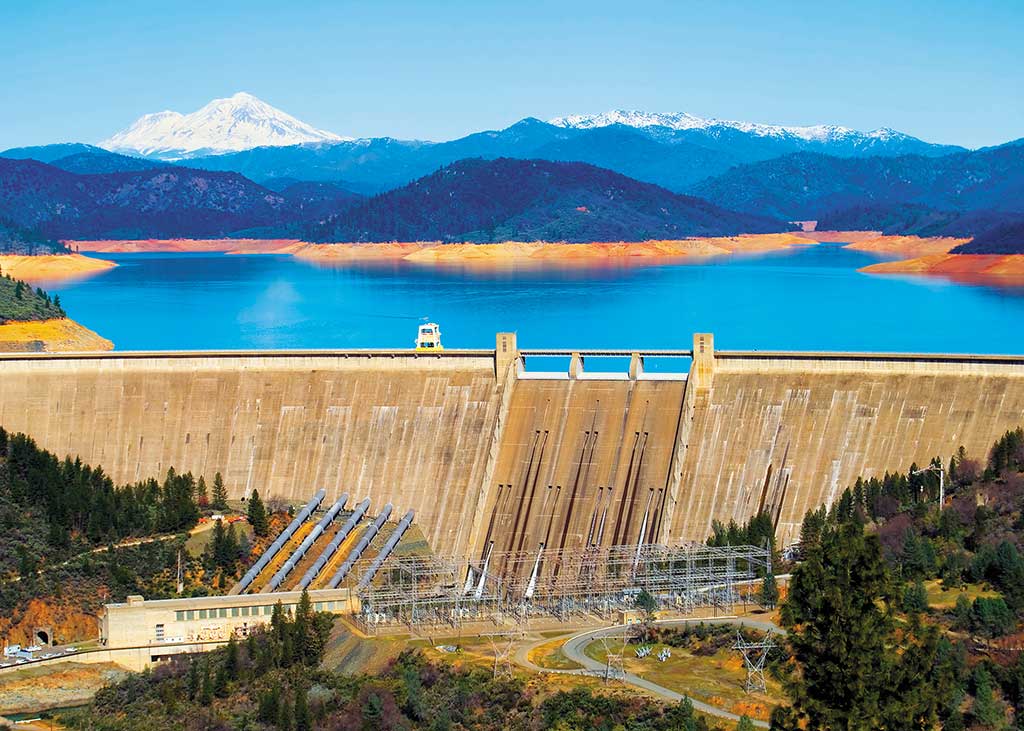
Even if you’re not fascinated by engineering statistics and superlatives, the one-hour tour (9am, 10:15am, 11:30am, 1pm, 2:15pm, and 3:30pm daily Memorial Day-Labor Day, 9am, 11am, 1pm, and 3pm daily Labor Day-Memorial Day, free) is a great experience, and it offers one of the best ways to get a broad view of Shasta Lake. Tours are limited to 40 people; it’s recommended to arrive 45 minutes before start time. The tours begin at the visitors center (530/275-4463, 8am-5pm daily). It’s a bit of a walk from the parking lot. To explore the area yourself, you can walk across Shasta Dam daily 6am-10pm to take in the views of the lake and Mount Shasta. This is a beautiful walk, especially at sunset, and one of many wonderful vantage points to see and photograph the mountain.
Shasta Dam is officially located at 16349 Shasta Dam Boulevard. To get here, take I-5 exit 685 onto Shasta Dam Boulevard. Drive west six miles on Highway 151 to the Shasta Dam visitors center.
Related Travel Guide
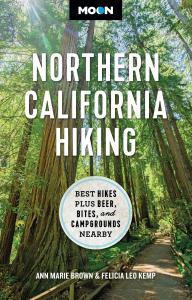
- Diverse Hiking Options: Whether you plan to take leisurely seaside walks or challenging journeys around the Sierras, enjoy outdoor getaways ranging from easy day hikes to multi-day backpacking trips
- Find Your Hike: Looking for something specific? Choose from strategic lists of the best hikes for breathtaking waterfalls, spring wildflowers, or hiking with your dog, plus a breakdown of the best hikes by season
- The Top Outdoor Experiences: Wander the terraces of the Ecological Staircase in Mendocino, hike up granite domes and through the high meadows of Yosemite. Hear the waves crash as you walk to a majestic tide fall in Point Reyes National Seashore. Conquer the summit of Lassen Peak, roam through vineyard-covered hills in Napa and Sonoma or look out upon Lake Tahoe’s crystal waters.
- Nearby Fun: Relax post-hike at a local brewery, savor a plate of fresh oysters or stargaze before bed at a nearby campground
- Essential Planning Details: Each hike is described in detail and marked with round-trip distance and hiking time, difficulty, terrain type, elevation gain, and access points
- Maps and Directions: Find easy-to-use maps, driving directions to each trailhead, and details on where to park
- Expert Advice: Longtime hikers Ann Marie Brown and Felicia Kemp shares their local secrets, unique tips, and honest opinions of each trail
- Tips and Tools: Advice on gear, first aid, and camping permits, plus background information on climate, landscape, and wildlife
About Moon Travel Guides: Moon was founded in 1973 to empower independent, active, and conscious travel. We prioritize local businesses, outdoor recreation, and traveling strategically and sustainably. Moon Travel Guides are written by local, expert authors with great stories to tell—and they can’t wait to share their favorite places with you.
Hitting the road? Check out Moon Northern California Road Trips!
What to read next…


Explore the West Coast




Pin it!
Click here to pin this article for later.
If you want more like this, follow @moonguides on Pinterest for travel inspo and trip planning advice.