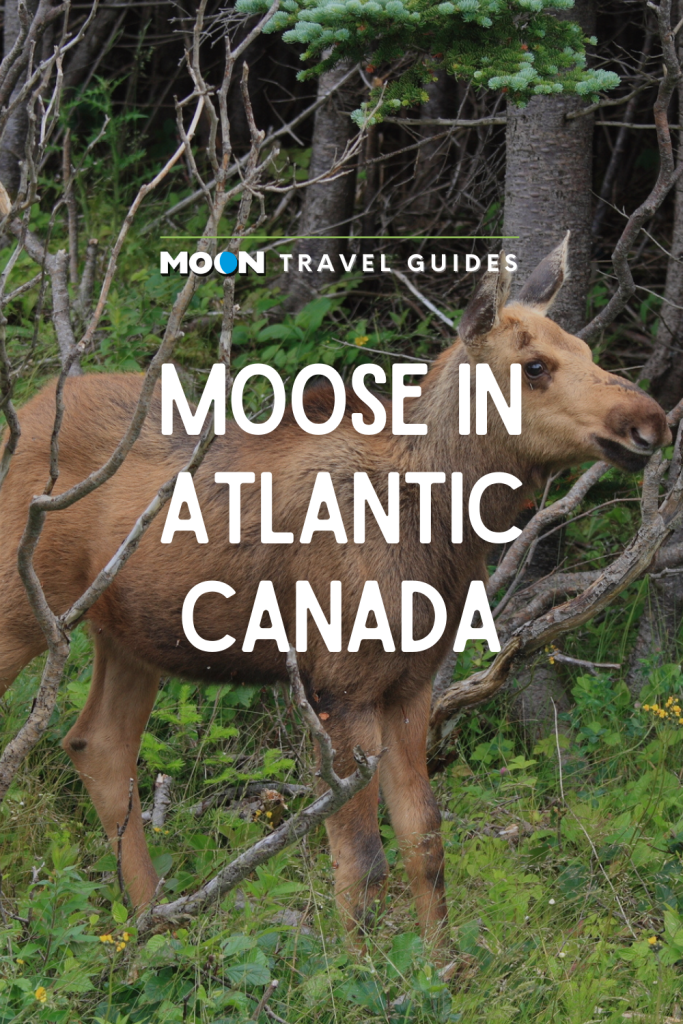
Moose in Atlantic Canada
The giant of the deer family is the moose, an awkward-looking mammal that appears to have been designed by a cartoonist. It has the largest antlers of any animal in the world, stands up to 1.8 m (5.9 ft) tall at the shoulder, and weighs up to 500 kg (1,102 lbs). Its body is dark brown, and it has a prominent nose, long spindly legs, small eyes, big ears, and an odd flap of skin called a bell dangling beneath its chin. Each spring the bull begins to grow palm-shaped antlers that by August will be fully grown. Moose are solitary animals that prefer marshy areas and weedy lakes, but they are known to wander to higher elevations searching out open spaces in summer. They forage in and around ponds on willows, aspen, birch, grasses, and all aquatic vegetation. Although they may appear docile, moose will attack humans if they feel threatened.
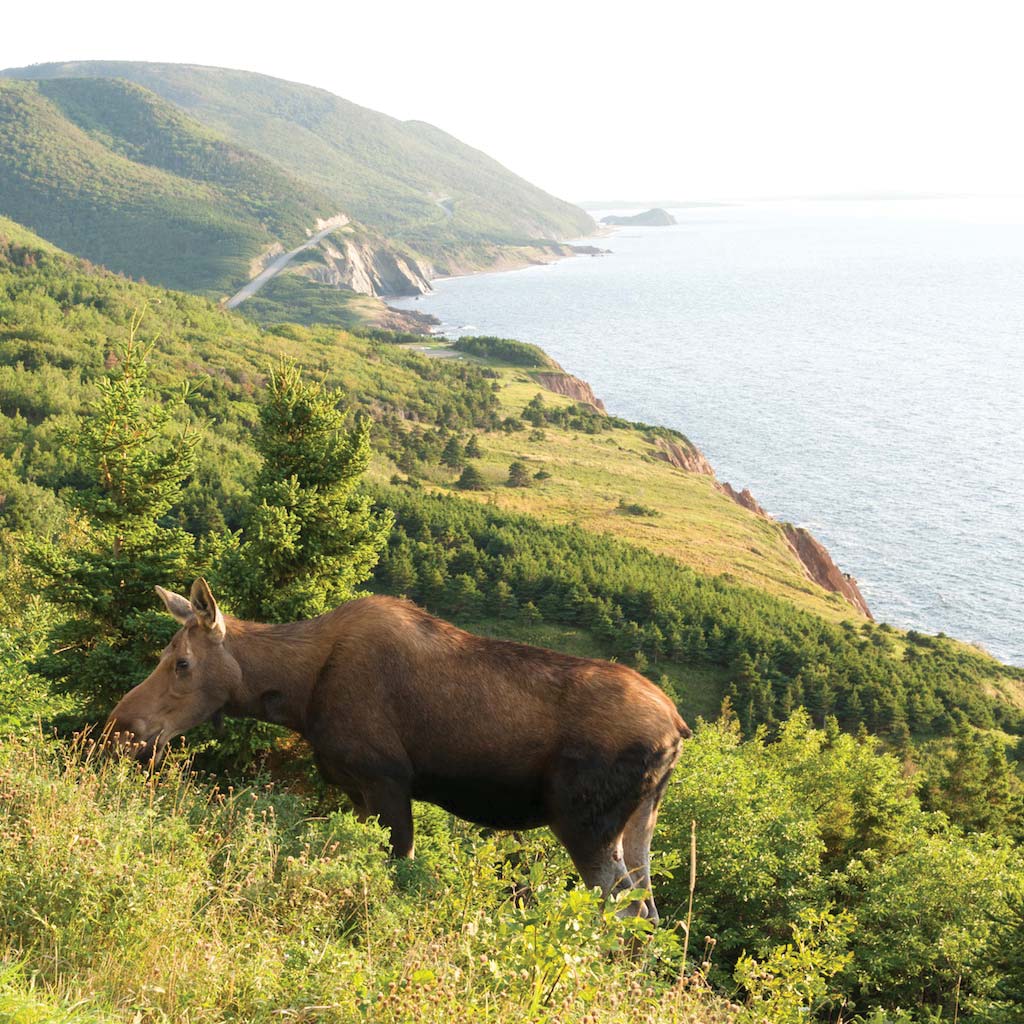
Moose are present in Nova Scotia and New Brunswick but are most common in Newfoundland, where they are naturally suited to the terrain. Ironically, they are not native to the island. The estimated 120,000 or so that thrive in the province today are descended from a handful of individuals introduced in 1878 and 1904 as a source of meat. On the mainland, they are most common in Cape Breton Highlands National Park (Nova Scotia).
Caution: Moose on the Loose
Some locals won’t drive on rural roads between dusk and dawn. The reason? Moose on the loose.
Over 500 moose-and-car collisions occur annually in Newfoundland alone, where the moose population is 120,000 and growing. Rural New Brunswick and Cape Breton Island are other trouble spots. A moose collision is no mere fender-bender. These animals are big and heavy, and hitting one at speed will make a real mess of your car (it doesn’t do the unfortunate moose much good either). Consequences can be fatal to both parties.
Seventy percent of collisions occur between May and October. Accidents occur mainly 11pm- 4am (but that’s no guarantee collisions won’t happen at any hour). If you must drive after dark in areas frequented by moose, use the high beams, scan the sides of the road, and proceed with caution.
Provincial governments post signs marked with the figure of a moose along the most dangerous stretches of highway.
Related Travel Guides
Pin It for Later